Fabricio Sanchez

Fabricio Sanchez

Principal Architect Lead at Google. Ben’s daddy and Angie’s husband. Crazy about tech, books, cinema, music and tennis. Writter and Podcaster.

Hello! This is Fabricio here. I’m a Principal Architect Lead at Google. I’m currently responsible for driving and executing transformational frontline AI projects and leading technical teams in both Public and Education sectors, leveraging my expertise in cloud computing, digital transformation, and application modernization and Artificial Intelligence. I’ve gathered a bit more than 20 years of experience in the tech industry (yes, I’m getting old).

Throghout my career I was lucky enough for being able to form a diverse and rich background, having served in various roles and industries. I co-founded and currently lead the content creation are of Cloud Casters, a podcast that discusses cloud topics in a relaxed and deeply informative way, and that has seen a terrific growth in audience (+800%) QoQ. Over my career, I have helped on developing and designed hundreds of high-scalable solutions which are mostly used by millions of users every day sitting on all the three main cloud providers: Google, Microsoft and AWS. I have also successfuly led technical teams of both engineers and tech sales, helping companies like Microsoft, Google, UCB and Conio Technologies on reaching out their growth goals.

I do hold a bachelor’s degree in computer science, a master’s degree in electrical engineering from the University of Sao Paulo in Brazil and a Professional Master’s degree (MBA) in CTO and Innovation with Wharton School from the University of Pennsylvania, and dozens of official certifications. As well, I’m a Google Cloud Certified Professional (GCCP), Microsoft Most Valuable Professional (MVP) and Microsoft Certified Professional (MCPS).

As you can see, I’m very passionated about sharing some knowledge and helping others solve complex problems in the cloud and AI spaces.

I’m glad you’re here. Thank you and enjoy the content.

Latest Articles


technology artificial intelligence cloud management architecture

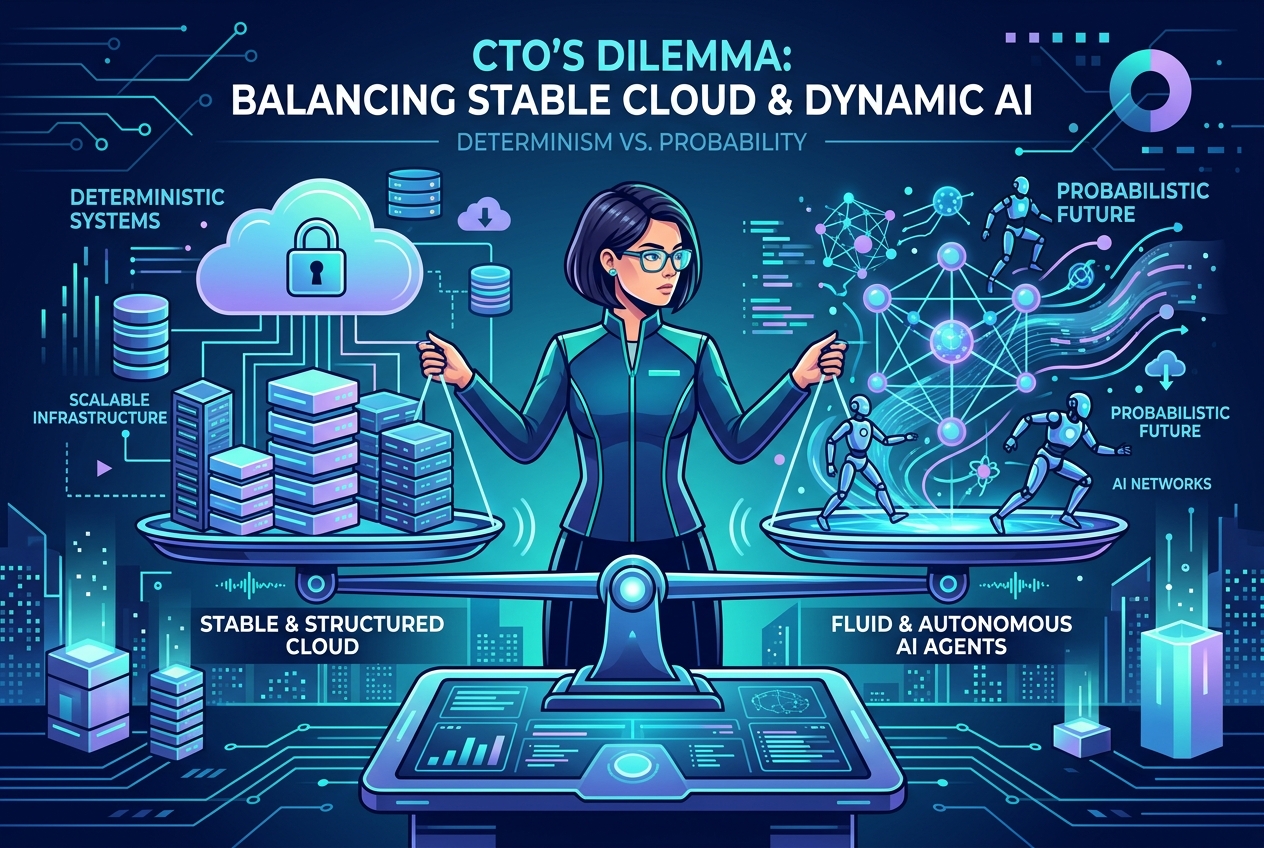
The CTO Dilemma: Keeping the Cloud Alive While Building an Autonomous Future

For the past twenty years of my career in the tech industry (yes, I’m getting old, I know), software engineering has been beautifully, comfortably (and thankfully) deterministic. That means that you write a line of code, you define an exact input, and you expect a completely predictable output. Then you assert those with deterministic tests suites.

By
technology education artificial intelligence transformation cloud

The New Path for Open Innovation in Public Sector and Education

For a long time, the expression “innovation in the public sector” has felt like a bit of an oxymoron. If you, like me, have spent any time navigating the enterprise tech landscape over the years, you know that the moment a project involves a school district, a university, or a government agency, the creative energy in the room instantly drops by about at least 80%. That’s just a fact. I even remember fellow colleagues saying “Oh, I would rather be in commercial than in Public Sector”.

By
technology education artificial intelligence transformation

The Agentic Education: What Stands Between Us and the Future of Teaching and Learning

If you have been following my posts here for a while (I know, I’ve been away for the course of last few months; life gets in the way sometimes, doesn’t it?), you probably know how much I love drawing parallels between different tech revolutions (I am a bit of a history and technology nerd, so sue me :)).

By
technology education artificial intelligence

Fighting Functional Illiteracy at scale

Functional illiteracy represents a profound and often underestimated challenge across the globe, confronting governments and societies worldwide. Far more complex than the mere inability to read or write, it signifies a deficit in the practical application of literacy skills necessary for navigating the demands of modern life. This article delves into the intricate nature of functional illiteracy, quantifies its pervasive impact across economic, health, and civic spheres, and explores the transformative potential of artificial intelligence (especially Generative AI) in fostering a more literate and equitable global society. It also introduces an open-source initiative we’ve been piloting at Google that targets that very need.

By
technology education artificial intelligence

Building a questions generator app with Gen AI

Couple of weeks ago I wrote an article here at the website discussing the big shift caused by the arrival of Generative AI in the industry of education. In that context, I mentioned that one of the ways this change was going to happen was that from now on, we’re going to get ourselves very focused on a given industry (because the knowledge about the industry truly matters now) and so, we’re going to be talking a lot more about use cases.

By
technology education

Generative AI applied to Education - The big shift

When the shift towards cloud computing happened in the market years ago, I remember seeing myself in meetings full of people explaining about what this new consumption-based business was all about and how the way of thinking the whole process of innovation and IT would need to change for this to make sense to companies. Right, I mean, moving virtual machines from on-prem to the public just to say “hey, my company runs on the cloud” didn’t (and still doesn’t) add any value to the business itself.

By
life technology

Life of a brazilian living and working in the US

It was a Thursday night, around 9 PM in 2018 when a very expected email (with the headline saying “Microsoft US Job Offer - Cloud Solution Architect”) finally arrived at my Mail inbox. I remember it as if it had happened yesterday. The mix of emotions. Excitement and fear combined. Only thinking about it now makes me emotional. It was the materialization of a dream. Three months later, we were moving to the US with our hearts thankful, happy, sad and full of hope with our new chapter.

By
education technology

The future of education is digital

Recently, I got in touch with a study that stated that, among those “content-based industries” in the market, Education is the one who invests less in technology, averaging 3% (against 35% for other industries) under the same segment, and considering my experience in the industry, I think it reflects the reality very well.

By